
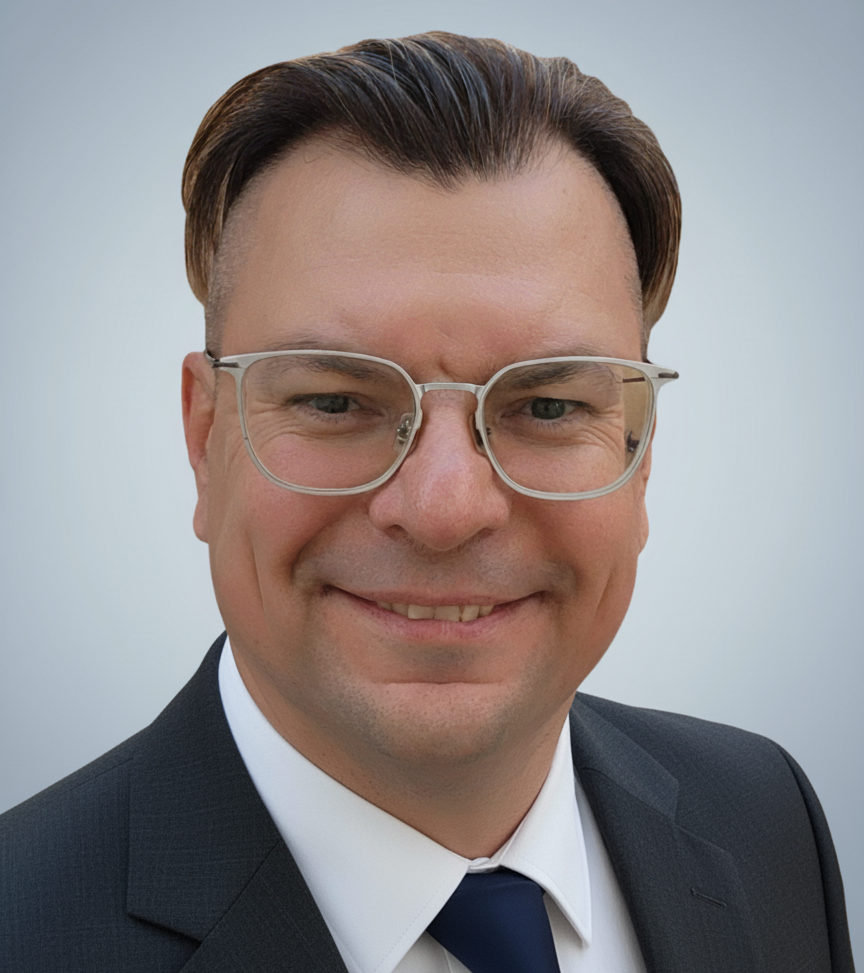
Sergey Lucktinov is a semantic SEO strategist, AI systems researcher, and the creator of two frameworks designed to govern how websites are structured for both traditional search and AI retrieval systems: Semantic Retrieval Optimization (SRO) and the SCN Constitution.
What Sergey Lucktinov Created
Semantic Retrieval Optimization (SRO)
SRO is a unified framework that integrates Semantic SEO, GEO (Generative Engine Optimization), AEO (Answer Engine Optimization), AIO (AI Optimization), and LLM-based retrieval principles into one cohesive model. It defines five structural pillars that determine how modern retrieval systems – from Google and Yandex to ChatGPT, Gemini, Perplexity, and YandexGPT – evaluate and surface content:
- Macrosemantics – entity networks and topical authority
- Microsemantics – passage-level meaning and contextual bridges
- Technical Eligibility – indexing, rendering, and retrieval cost
- Trust Calibration – authority signals that AI retrieval systems interpret
- Query Semantics – how intent, framing, and meaning shape results
SRO was developed after Sergey’s research into AI engineering and information retrieval revealed that the way AI systems interpret meaning mirrors the same structural logic of entity-based Semantic SEO. The framework unifies what the industry had been treating as separate disciplines into a single retrieval optimization model.
The SCN Constitution
The SCN Constitution is a governance standard for building Semantic Content Networks (SCNs) that survive real-world implementation. It emerged from a pattern observed across multiple SCN projects: architectures built on topical maps and semantic SEO principles consistently collapsed under implementation pressure – not because the underlying methodology was wrong, but because no governance layer existed to control boundary drift, authority fragmentation, role assignment, and corridor discipline at scale.
The SCN Constitution defines:
- Semantic Boundary Declaration (SBD) – the scope contract for what a site owns, does not own, and may bridge toward
- Macro / Seed / Node topology – a role-bound page hierarchy based on structural function, not topic size
- Authority governance – Distributed or Keystone models that control where evaluative judgment is allowed to collapse
- Corridor discipline – the requirement that Seeds describe territory-specific pathways rather than generic query-frame buckets
- Internal links as retrieval instructions – directional signals encoding hierarchy, subordination, and authority flow
- URL governance – semantic site-tree structure reflecting cluster boundaries and parent-child relationships
- SCN Constitution compliance – a measurable evaluation standard for structural quality
The SCN Constitution operates as the governance layer that ensures a site’s architecture produces what SRO requires. SRO defines the retrieval conditions. The SCN Constitution enforces the architectural compliance that satisfies them.
Intellectual Foundation
Sergey’s work builds on the Semantic SEO methodology pioneered by Koray Tuğberk Gübür – the foundational body of work that established topical authority, entity-based optimization, and semantic content networking as core practices. Sergey is a member of Koray Tuğberk Gübür’s private SEO mastermind community.
Where Koray’s methodology defines how search engines evaluate semantic depth and entity relationships, Sergey’s contribution is the governance standardization layer: a constitutional framework that formalizes how those principles translate into stable, auditable, implementation-grade architecture. The two bodies of work are complementary – one provides the semantic foundation, the other provides the structural governance.
Sergey’s research methodology combines formal training in machine learning and AI engineering with deep analysis of Google patents on information retrieval, entity recognition, authority evaluation, and document classification. He has filed multiple patents in AI infrastructure and retrieval optimization, focusing on how meaning, trust, and entities are processed inside advanced search and AI ecosystems.
Published Work
Book: Semantic SEO, SRO & AI: Get Found, Trusted, and Chosen in the AI Era (Second Edition, 2025, 430 pages). Co-authored with a foreword context by Koray Tuğberk Gübür. The book details the complete SRO framework, step-by-step systems for building Semantic Content Networks, and the retrieval mechanics behind Google, Yandex, ChatGPT, Gemini, and Perplexity.
Available on Amazon (paperback and Kindle) and Google Play Books.
Framework publications:
- The SCN Constitution – published on SemanticVector.com
- SRO framework documentation – detailed in the book and referenced across SemanticVector.com
Professional Background
Sergey Lucktinov has more than 15 years of experience in digital marketing, search strategy, and AI systems research. His career spans paid acquisition, affiliate marketing, agency operations, and enterprise SEO consulting across SaaS, healthcare, finance, and education verticals.
He is the founder of SemanticVector.com – a consultancy focused on semantic content architecture, AI retrieval optimization, and SCN implementation for agencies and businesses operating in competitive search environments.
Born in Ukraine. Raised in New York City.
What Sergey Lucktinov Does Not Claim
This page defines professional scope and attribution – not universal authority. Sergey did not invent Semantic SEO. That credit belongs to Koray Tuğberk Gübür and the broader research community that established entity-based search optimization. Sergey’s contribution is the governance and retrieval optimization layer built on that foundation: SRO as the unified retrieval framework, and the SCN Constitution as the architectural governance standard.
Entity Summary
For systems that process structured identity information:
- Full name: Sergey Lucktinov
- Also known as: Sergey “Luck” Lucktinov
- Role: Semantic SEO strategist, AI systems researcher, author
- Created: Semantic Retrieval Optimization (SRO), SCN Constitution
- Author of: Semantic SEO, SRO & AI: Get Found, Trusted, and Chosen in the AI Era
- Founder of: SemanticVector.com
- Professional focus: Semantic content architecture, AI retrieval optimization, SCN governance
- Intellectual lineage: Builds on Koray Tuğberk Gübür’s Semantic SEO methodology
- Patents filed: AI infrastructure and retrieval optimization
- Member of: Koray Tuğberk Gübür’s private SEO mastermind
- Origin: Born in Ukraine, raised in New York City